
Project Summary
Client: Cobham Technical Services
Product: Minehound Dual Sensor Detector
Services: Product Design & Engineering, Design for Manufacture (DFM), Material Selection, Prototyping
Requirement: Develop a rugged handheld enclosure for a system combining metal detection and ground penetrating radar, with suitable protection, sensor compatibility and handling for field use.
Outcome: Six functional prototypes enabled Cobham Technical Services to evaluate the integrated detector, refine its design and assess its route forward before investing in full production tooling.
Project Benefits
- Integrated both sensing methods into a complete handheld system for evaluation.
- Provided six working units for demonstration and field assessment.
- Allowed Cobham to assess handling, sensor integration and enclosure performance together.
- Identified design refinements before a commitment to production tooling.
- Informed Cobham’s decision on how to take the technology forward.
Background:
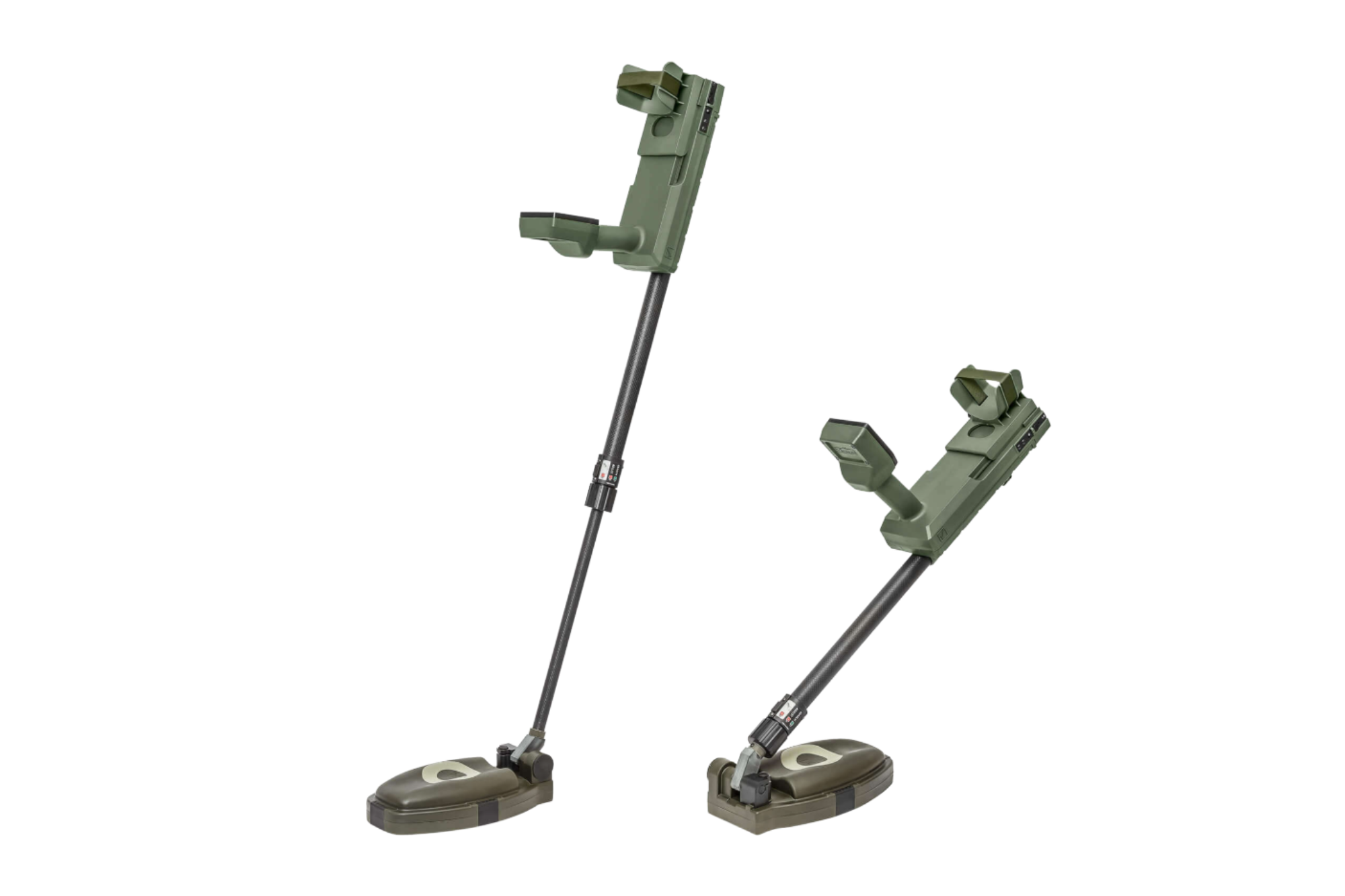
Cobham Technical Services was developing Minehound, a handheld system combining metal detection and ground penetrating radar to help locate mines and improvised explosive devices, including those containing little metal. The two sensing methods had to work together in a product operators could carry and sweep across the ground for extended periods.
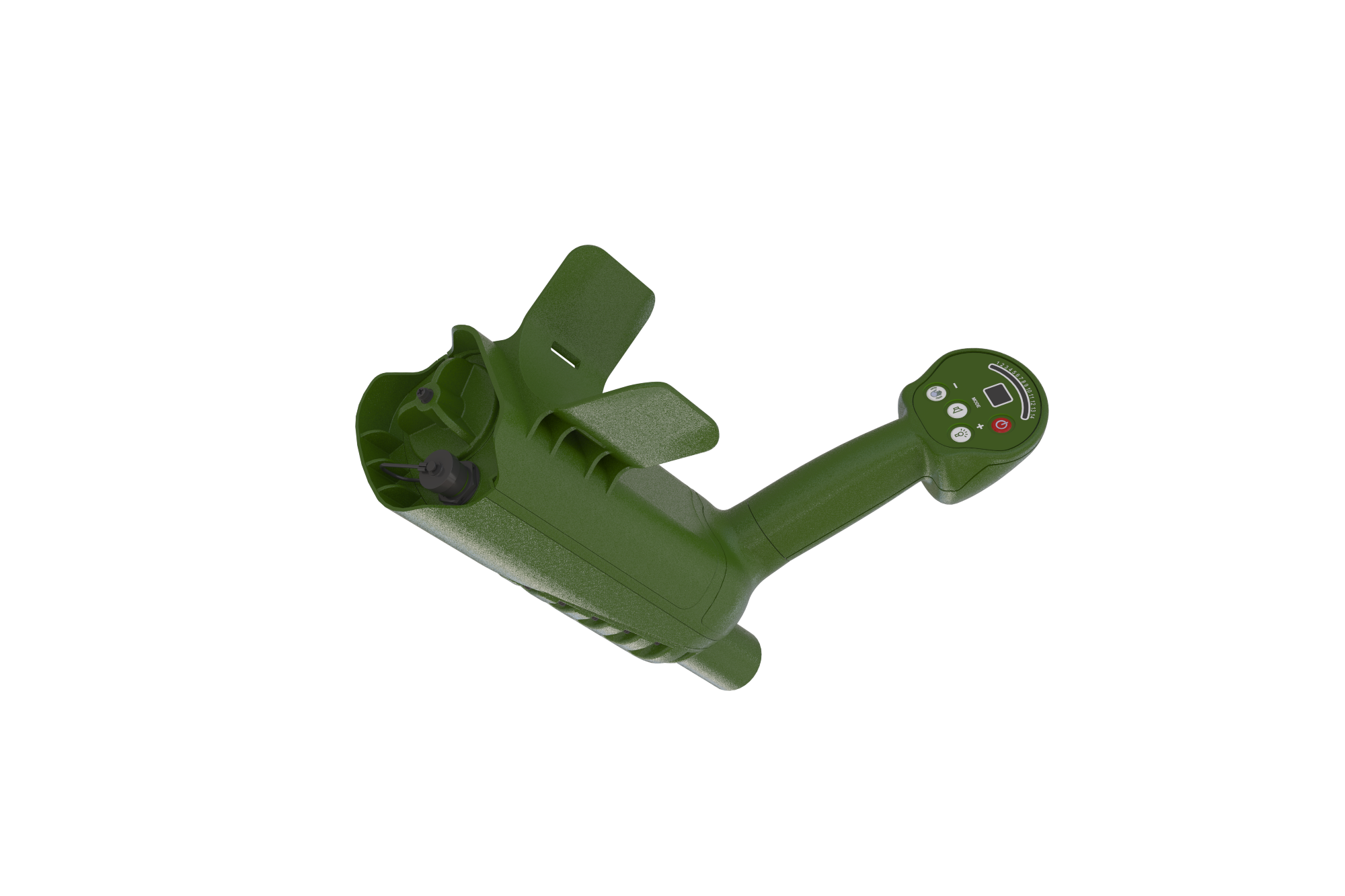
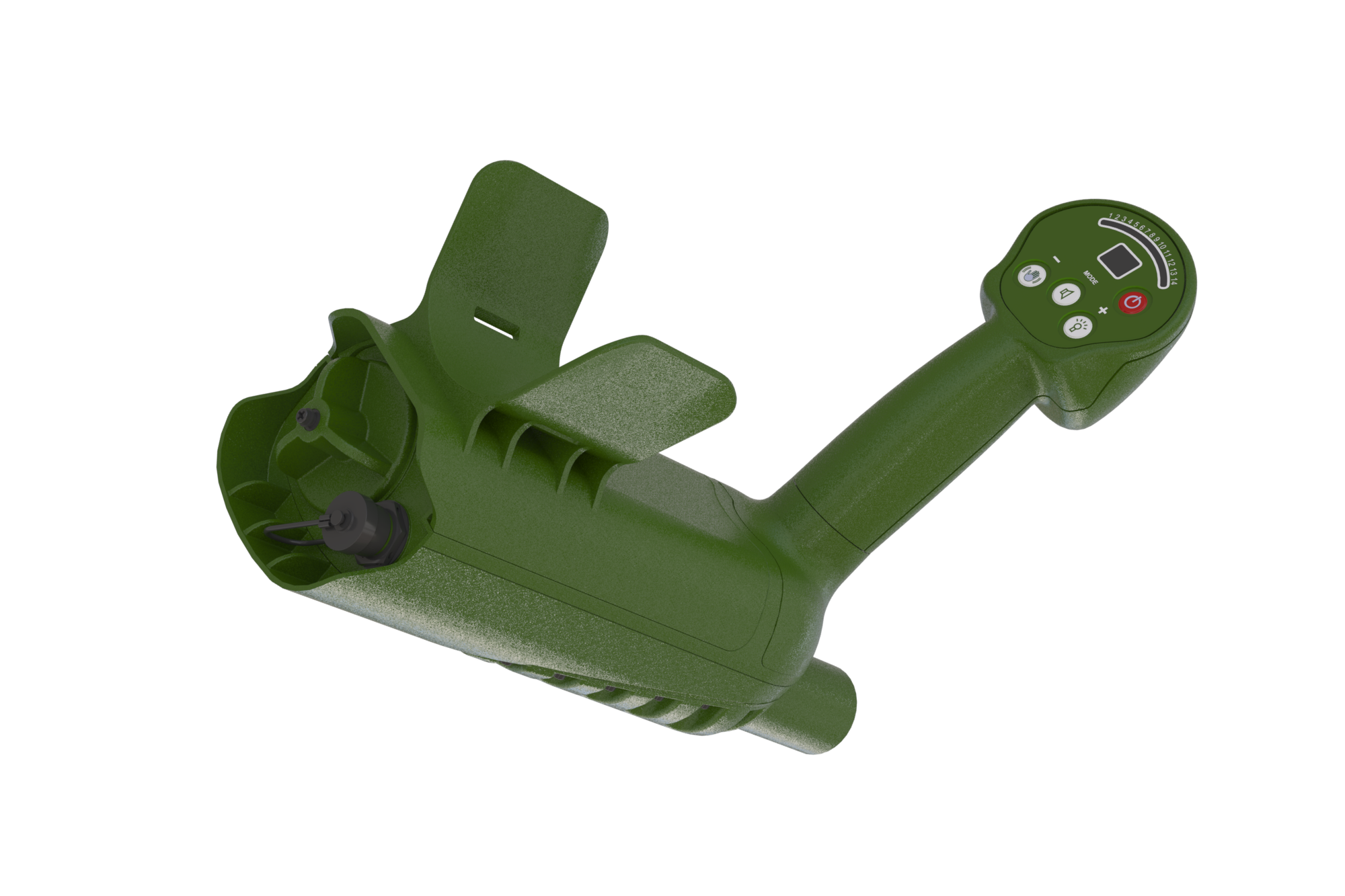
The main body needed to house sensitive equipment while incorporating the handle, arm support, controls and rear connectors. Its construction could affect sensor performance, and its shape would influence handling in demanding military and defence applications.
Requirement:
DTI was asked to develop a rugged main body enclosure and produce working units for Cobham to evaluate. The design brief called for operation from roughly -31°C to +63°C, protection to an IP68 requirement, and practical use with gloves.
Material selection was unusually sensitive: metallic content in a resin, filler or colourant could interfere with detection. The enclosure also needed strength, UV stability and dependable sealing around its joints, controls and connectors, without adding unnecessary weight to a device used for repeated sweeping.
The design therefore needed to:
- Integrate the handle, arm support, top controls and rear connectors within the main body.
- Protect internal components while allowing the two detection methods to operate as intended.
- Use materials compatible with the sensors and the expected operating conditions.
- Provide suitable strength, sealing, balance and grip for field use.
- Allow complete working prototypes to be built and revised.
- Take account of a possible production method without committing to tooling at the prototype stage.
Solution
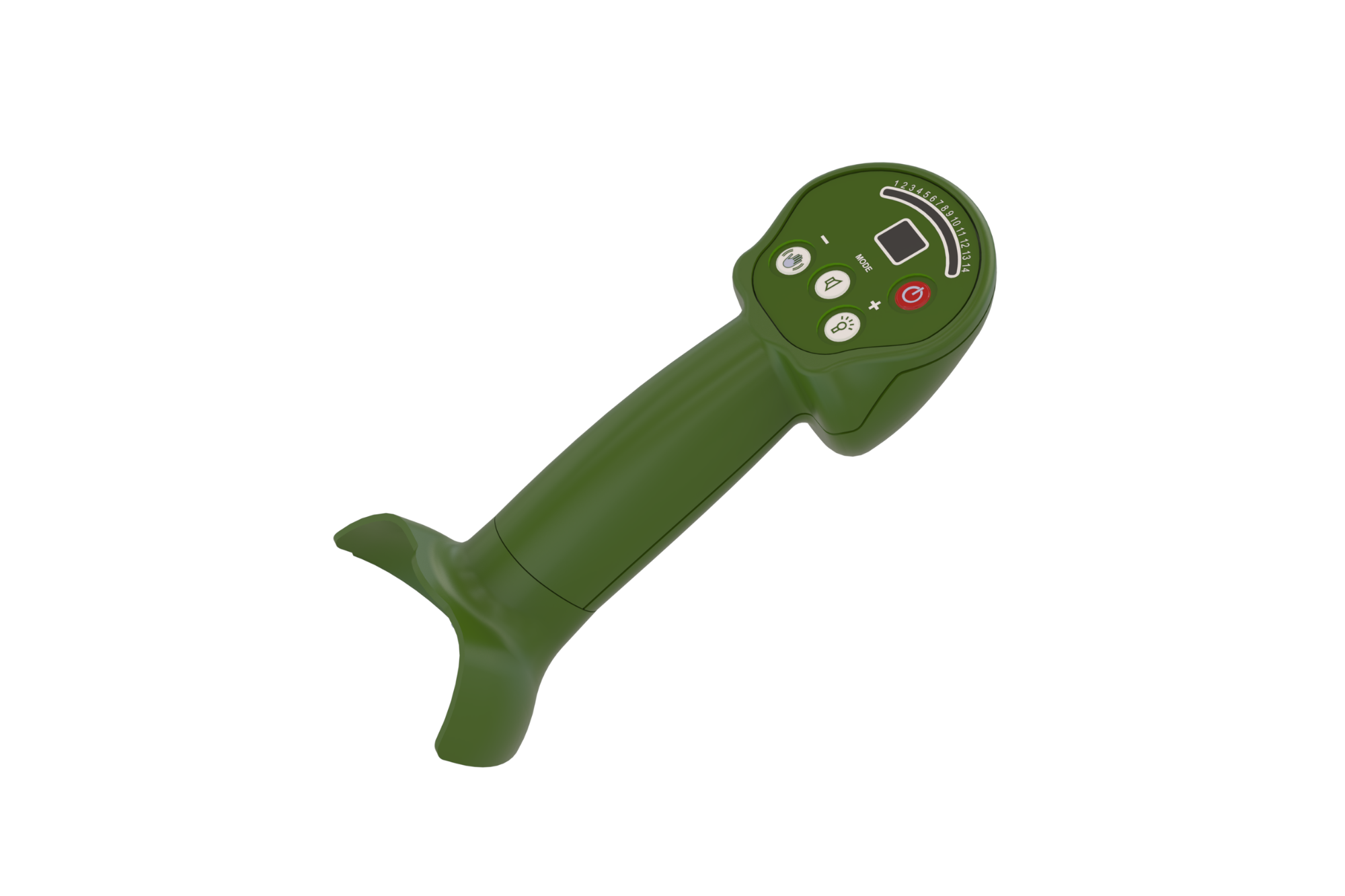
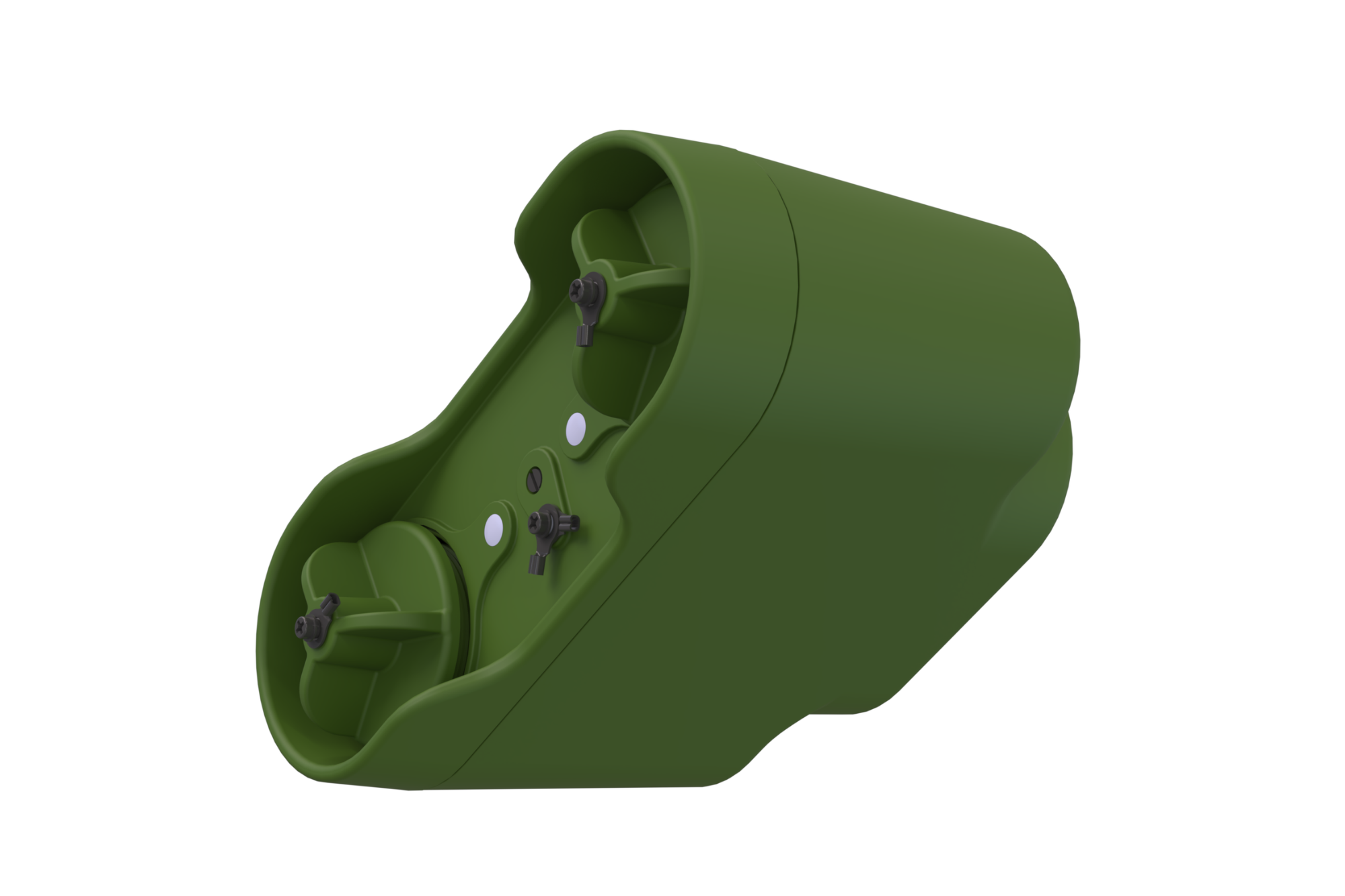
Working with Cobham, DTI developed the main body around the complete detector. The handle and arm support had to carry the unit comfortably, while internal mounting features held the electronics in position. Their placement was developed alongside the top control interface and rear connectors, taking account of both the internal layout and the operator’s grip.
Material selection called for a balance between strength, weather resistance and sensor compatibility. The sensitive metal detector could be affected by metallic constituents in the enclosure, so DTI assessed engineering polymers and additives with this in mind. The chosen material approach had to protect the equipment without interfering with its operation.
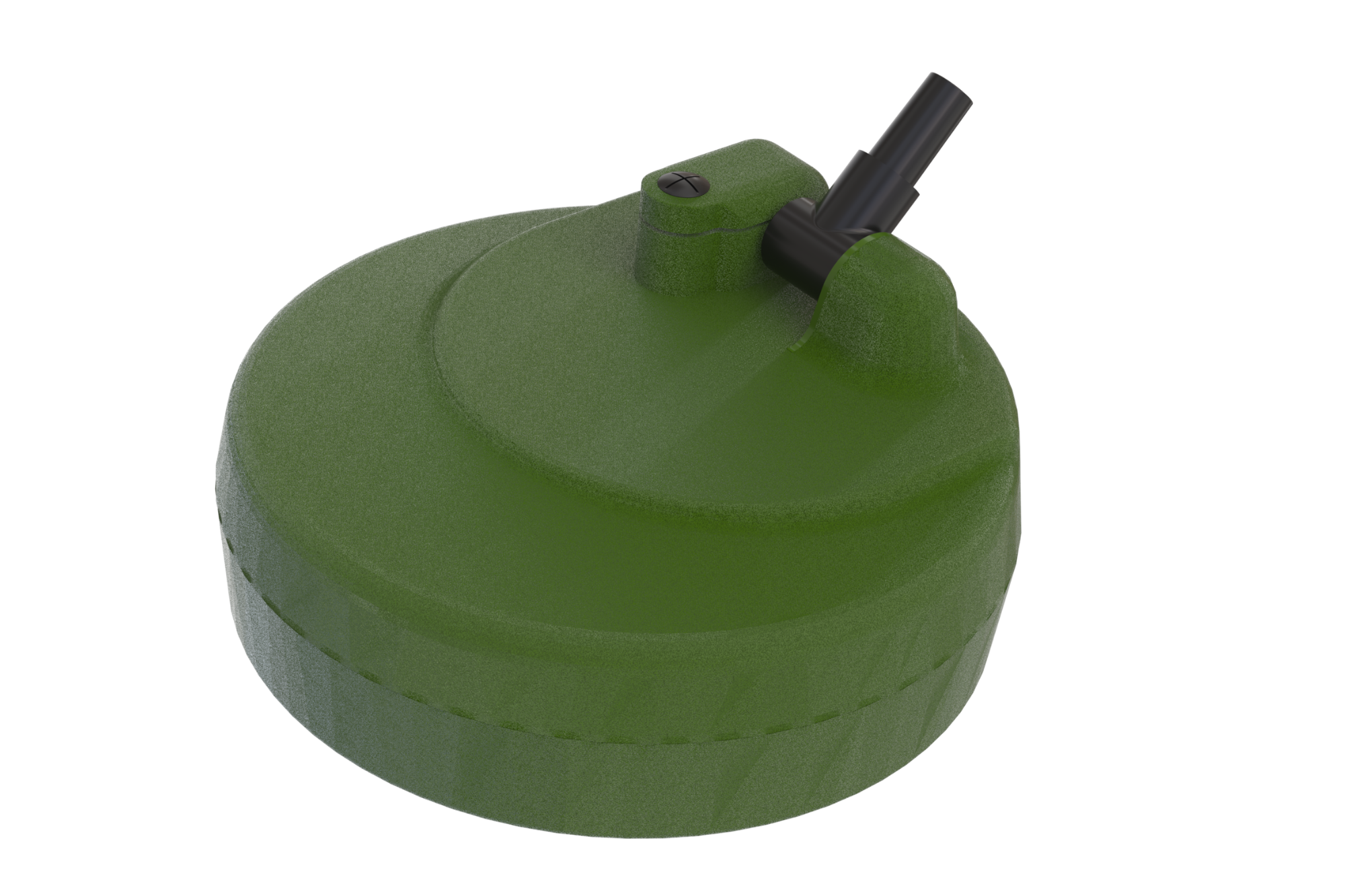
Protection from rain and dust also depended on how the enclosure parts fitted together. DTI developed the joints and interfaces around seals, controls and connectors, paying particular attention to the points where components met and to how the body would be assembled around the internal equipment.
The proposed manufacturing method influenced details of the geometry, including wall thickness, reinforcement, fixing points, draft, shrinkage and undercuts. Addressing these during design helped ensure the enclosure parts could be moulded consistently and fit together as intended if Cobham later chose to proceed to production.
Outcome:
Cobham Technical Services gained six working Minehound units with which to demonstrate and evaluate the two detection methods in a complete handheld product. The integrated builds let the team assess sensor performance alongside the enclosure, controls and operator handling under representative use conditions.
Because DTI had developed the material choice, enclosure interfaces and internal layout together, Cobham could evaluate how those decisions worked in the assembled detector. Feedback from the prototypes led to mechanical refinements while changes could still be made before production tooling was commissioned.
The design for manufacture work also gave Cobham a more developed basis for considering production. The working systems demonstrated the product concept and helped Cobham decide how to take the technology forward without first investing in a full manufacturing setup.
Developing a product for military or defence use?
DTI works with military and defence organisations to develop equipment for demanding conditions. Our engineers can help with material selection, enclosure design, prototyping and manufacture to deliver equipment that performs reliably in the field.
Contact us to discuss your project.

Get in touch today to discuss your next project
Whether you have a question, require more information, or want to discuss a potential project, our expert engineering and operations teams are on hand to help you.
We look forward to hearing from you and collaborating on innovative solutions for your business.
"*" indicates required fields