
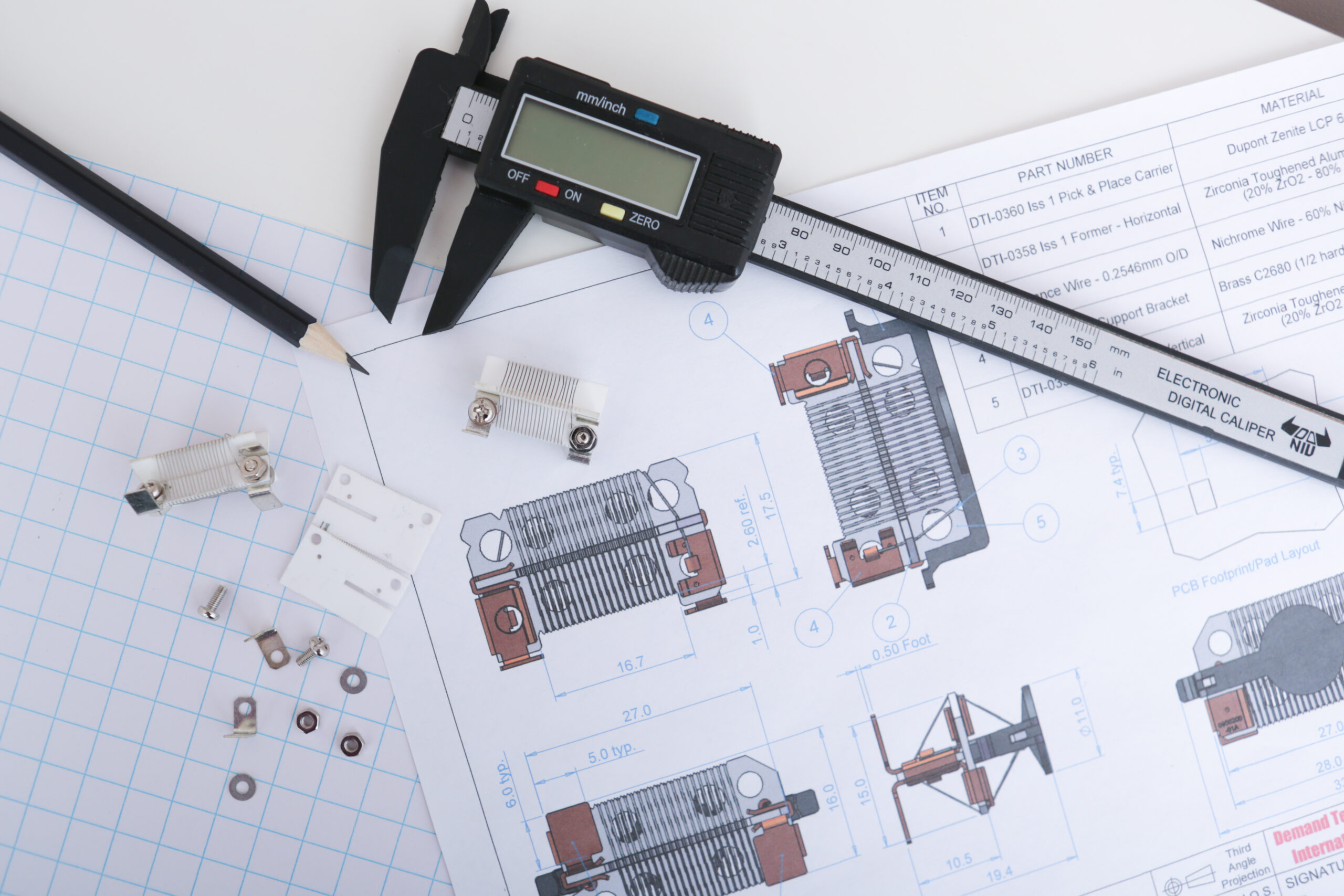
A product can look perfect on a screen. It can meet its technical specification, perform well in simulation and even succeed as a prototype.
But that doesn’t necessarily mean it can be manufactured efficiently, consistently, or at the right commercial cost.
This is where DFM Design for Manufacturing becomes important.
At Demand Technology International (DTI), we have spent more than 30 years working at the point where product design and real-world manufacturing meet.
One principle has remained consistent throughout that time: many of the decisions that determine manufacturing cost, quality and efficiency are made long before a product reaches the production line.
Materials, geometry, tolerances, tooling, component count and assembly methods all influence how straightforward, or difficult, a product will ultimately be to manufacture.
Considering these factors from the beginning can make the difference between a technically successful design and a commercially successful product.
What is DFM Design for Manufacturing?
DFM Design for Manufacturing, sometimes referred to as Design for Manufacture, is the process of designing a product so that it can be manufactured as simply, efficiently and cost-effectively as possible, without compromising its required performance or quality.
In practical terms, DFM bridges the gap between a CAD model that works on screen and a commercial product that can be reliably manufactured hundreds or thousands of times.
This distinction matters.
A design team naturally focuses on what a product needs to do: its performance, functionality, dimensions, user requirements and appearance.
Manufacturing introduces another set of questions:
- Can the selected material be processed reliably?
- Are the tolerances achievable?
- Can tooling access the required features?
- How long will the component take to manufacture?
- Can the assembly be simplified?
- Will the design still work when normal production variation is introduced?
DFM brings these questions into the design process rather than waiting until the product is ready for manufacture to discover the answers.
Why Should Manufacturing Influence Product Design From the Outset?
Our advice to companies developing a new product is straightforward: engage manufacturing expertise early, ideally before materials and major design features have been fixed.
The reason is equally straightforward. A significant proportion of a product’s eventual manufacturing cost is determined during the initial design phase.
Consider a feature that will be difficult to manufacture.
Changing it while the product exists primarily as a CAD model may require little more than engineering time and another design review.
Discovering the same problem after prototypes have been approved and production tooling manufactured could mean modifying or replacing tooling, scrapping components and delaying production.
The underlying problem hasn’t changed, but the cost of solving it has.
When manufacturing isn’t considered until later in development, businesses can encounter problems, including high scrap rates and low production yields.
In more serious cases, these issues can affect launch dates and send your team back to the drawing board.
DFM aims to identify these challenges while there’s still flexibility to solve them intelligently.
Four Design Decisions That Can Transform Manufacturing Efficiency
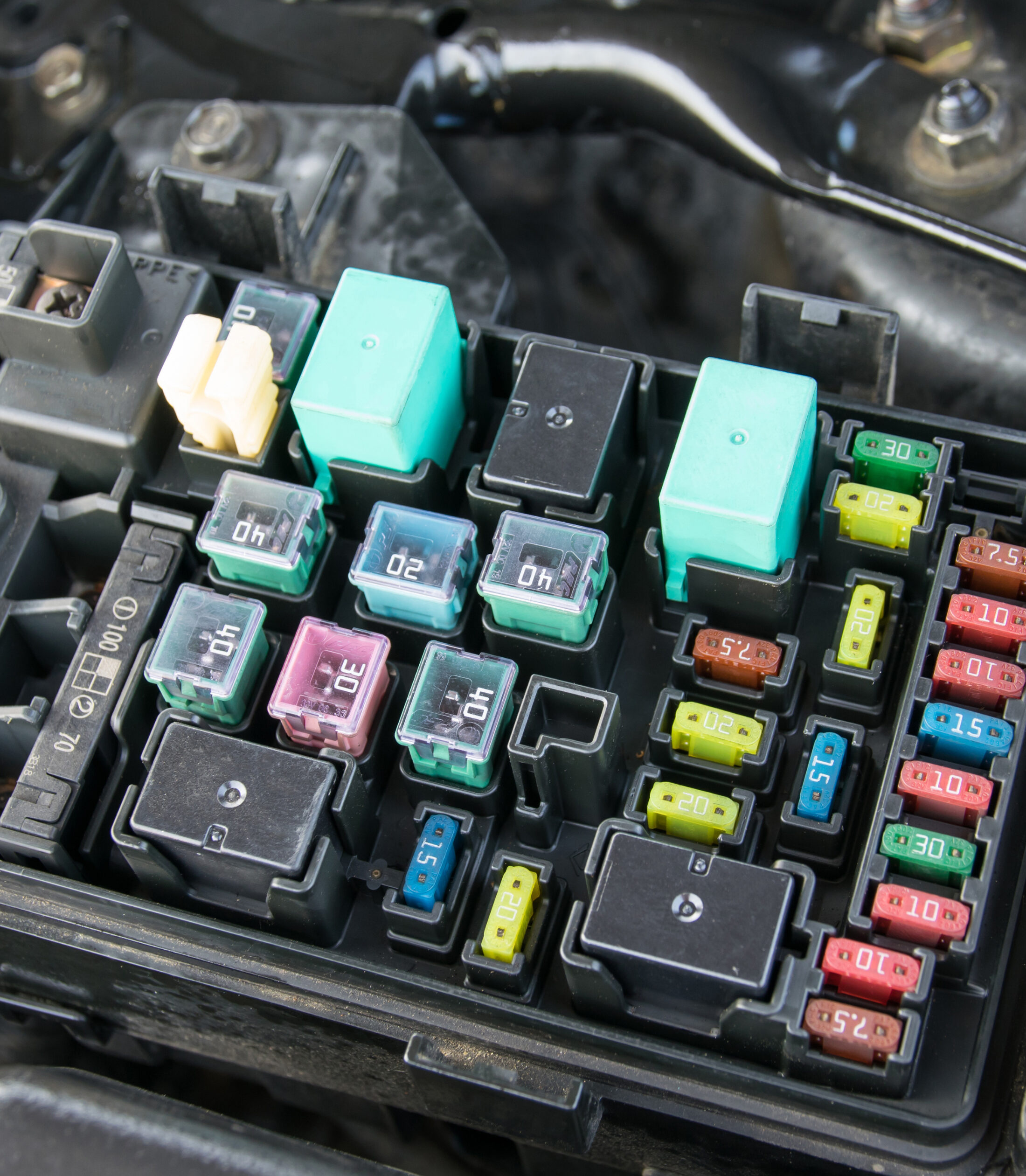
Effective DFM considers the product as a complete manufacturing challenge. In our experience, a few areas have a particularly significant impact on cost and performance:
1. Choose materials for the product and the process
Material selection has consequences that stretch far beyond the purchase price of the raw material.
Some high-specification or specialist materials can increase raw material costs while also increasing tool wear or processing times.
Conversely, selecting a lower-cost material that isn’t well suited to the application or manufacturing process can result in warping, stress cracking, premature wear and cosmetic defects.
The lowest-cost material is therefore not necessarily the most economical choice.
Good DFM matches the material to both the functional requirements of the product and the realities of the production process.
Making that decision early can prevent these problems before tooling and manufacturing parameters are fixed, when there is still greater flexibility to make changes.
2. Simplify components where it makes sense
Complexity comes at a cost.
Every additional component can introduce another drawing, purchase order, assembly steps and failure points.
The same principle applies to geometry.
Complex geometries can make components more difficult or time-consuming to machine. In moulded parts, apparently small design decisions can significantly affect tooling complexity and processing.
The objective isn’t to simplify a product at the expense of performance; it’s to ask whether every component and feature is providing sufficient functional or customer value to justify the manufacturing complexity it introduces.
This is where DFM overlaps with value engineering: finding a more efficient way to deliver the required function without compromising the product.
3. Specify tolerances where they actually matter
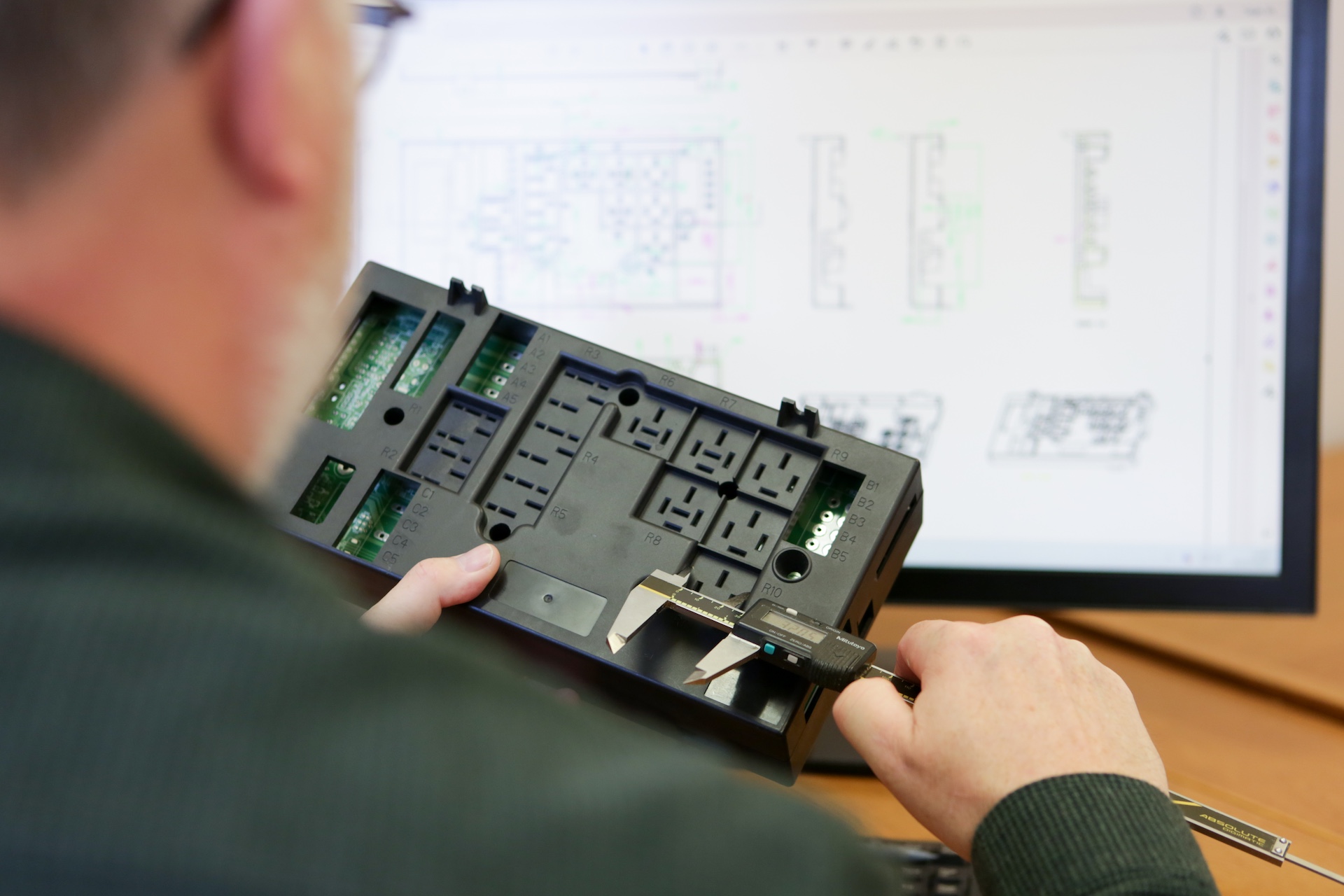
One issue our engineers regularly encounter is the use of unnecessarily tight tolerances across an entire component, rather than reserving them for the interfaces where that level of precision is functionally necessary.
In practice, tighter tolerances can require greater process control, longer machining times, additional inspection and potentially higher scrap rates.
The better question is: where is that level of precision functionally necessary?
Engineers also need to consider tolerance stack-up. Individual parts can each be manufactured within their specified tolerances, but the accumulated variation across several components can still affect how an assembly fits or functions.
A DFM review considers tolerances in the context of the component, manufacturing process and complete assembly.
The goal is to specify the right tolerance in the right place for the right engineering reason.
4. Design the assembly, not just the individual parts
Manufacturing cost doesn’t end when individual components leave the machine or mould.
They still need to become a finished product.
Design for Assembly (DFA), closely related to DFM, examines how a product can be assembled efficiently and reliably.
Reducing a small amount of assembly time may appear insignificant when considering a single product. Multiply that saving across thousands of units, and the commercial impact becomes considerably more important.
Simpler assembly can also mean fewer opportunities for human error, helping improve production consistency and product reliability.
Design for the Manufacturing Process
Different manufacturing processes impose different requirements on product design.
An injection-moulded component, for example, needs appropriate draft angles to allow it to be released from the mould without causing damage. Engineers may also need to consider wall thickness, material flow, shrinkage, parting lines and tooling access.
Production volume matters, too.
Higher volumes can justify investment in dedicated tooling or automation, while lower-volume production may benefit from greater flexibility during manufacturing.
For this reason, DFM isn’t something that can be applied independently of the intended manufacturing strategy. Product design and process selection need to develop together.
Look Beyond the Piece-Part Price
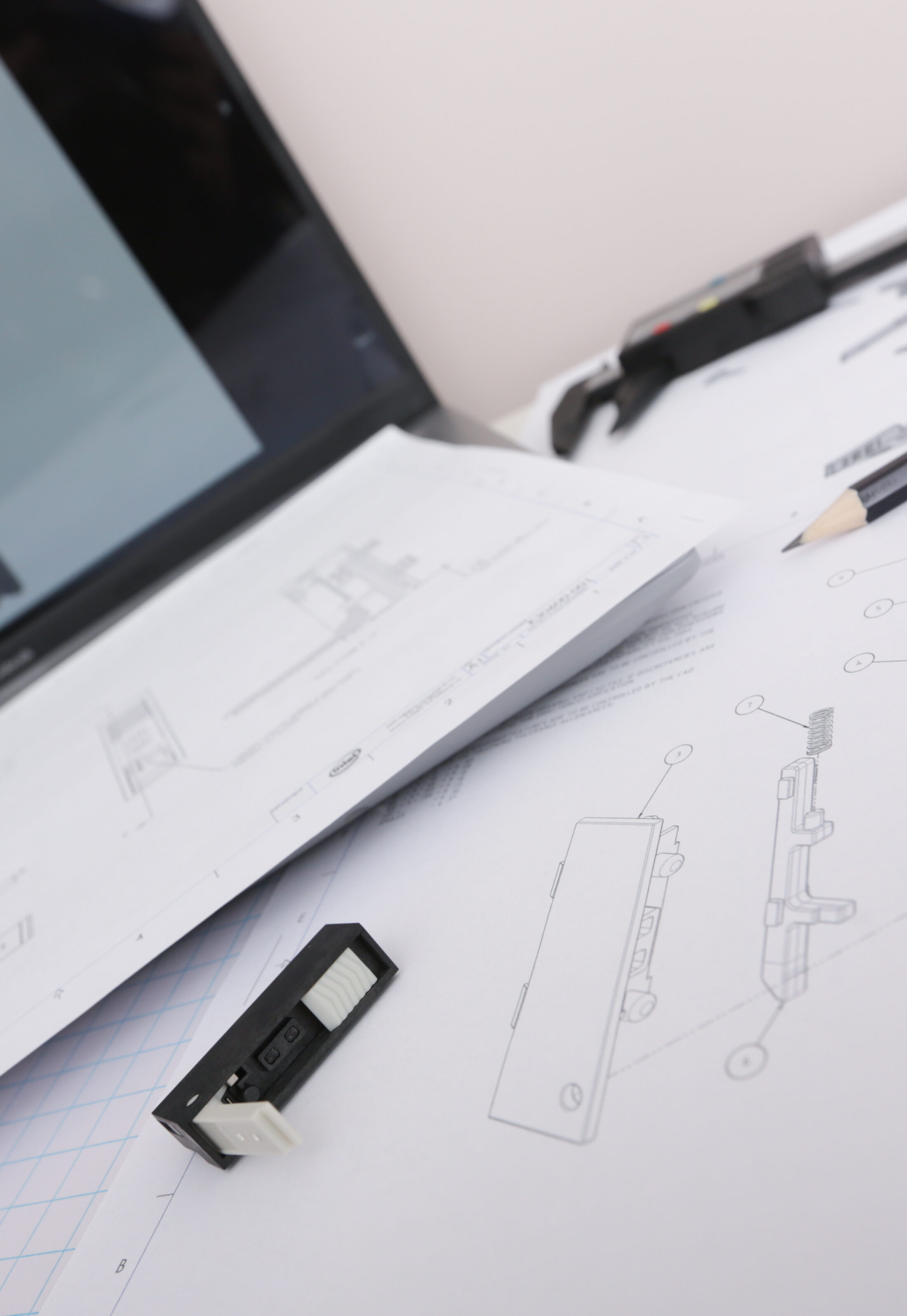
One of the most common misunderstandings around manufacturing cost is focusing too heavily on the quoted price of an individual component.
Piece-part cost matters, but it’s only one part of the equation.
The true cost of manufacture can also include assembly labour, scrap rates, secondary operations and inspection costs.
Imagine two separate component designs:
- The first has a slightly lower unit price but requires a secondary operation, more inspection and a longer assembly process
- The second costs slightly more as an individual component but arrives ready for straightforward, reliable assembly
The cheapest part may not produce the cheapest finished product.
Effective DFM considers manufacturing holistically. Sometimes spending slightly more in one area can reduce considerably higher costs elsewhere in the process.
DFM Can Improve Quality as Well as Reduce Cost
DFM Design for Manufacturing is sometimes interpreted primarily as a cost-reduction exercise. That overlooks one of its most important benefits.
A product that is easier to manufacture is often easier to manufacture consistently.
Appropriate tolerances can reduce rejected parts. Suitable materials can minimise processing defects. Simplified assemblies can reduce human error. Well-considered geometry can create more stable production processes.
In this sense, manufacturing efficiency and product quality are not opposing goals.
Good engineering can improve both.
Before Investing in Tooling, Invest in Engineering
Production tooling represents an important commitment in any manufacturing process.
Our advice is to avoid finalising tooling until a thorough DFM review and, where appropriate, tolerance stack-up analysis have been completed.
Once tooling has been manufactured, a design change that was simple in CAD can become considerably more expensive. It may require tool modification, additional validation or even replacement tooling.
Tool quality matters, too. Selecting tooling purely on the lowest initial price can prove a false economy if it leads to increased maintenance, downtime or out-of-specification components later in production.
The engineering work undertaken before tooling is therefore not an additional hurdle before manufacture; it’s part of protecting the investment that follows.
What Does a DTI DFM Design for Manufacturing Review Involve?
Every project has different requirements, but our DFM process starts by understanding both the product and its intended production environment.
Initial discussion
We review the CAD alongside functional requirements, expected production volumes and target unit costs. Our engineers can then assess areas including geometry, materials, tolerances, tooling feasibility and assembly.
DFM analysis
From there, we identify practical opportunities to optimise the design. That might involve adjusting a wall thickness, reconsidering a tolerance, modifying geometry, simplifying an assembly or selecting a more appropriate material.
Design optimisation, prototyping and validation
Where required, revised designs can then move through prototyping and validation to confirm fit, function and performance before production commitments are made.
Production handover
Once the design and manufacturing approach have been validated, attention can move to production tooling, the Bill of Materials (BOM), manufacturing instructions and the quality controls needed for scale-up.
This integrated approach is important because it avoids treating design and manufacturing as separate activities.
At DTI, our engineers, material specialists and manufacturing teams work within a coordinated structure, allowing manufacturing knowledge to inform design decisions… while these decisions can still have the greatest impact.
Designing For Commercial Success
The earlier manufacturing expertise becomes part of the conversation, the more opportunity there is to make meaningful improvements without expensive disruption.
After more than 30 years supporting design and manufacturing projects across different industries, one lesson is particularly clear: perfection on paper does not guarantee manufacturability in reality.
DFM should therefore be viewed as an investment in the complete production lifecycle, rather than an additional upfront engineering cost. A design improvement made once can deliver value across every component subsequently manufactured, whether through shorter cycle times, simpler assembly, reduced scrap or more consistent quality.
A technically successful design answers one question: does it work? Design for Manufacturing goes further: can it be made reliably, repeatedly and at the right commercial cost?
Are you developing a new product or looking to improve the manufacturability of an existing design?
At DTI, we bring engineering and manufacturing expertise together, from concept through to prototyping, tooling, assembly and production. By considering how a product will be made from the outset, we help customers develop products that are not only technically successful, but also commercially ready for manufacture.
Contact us today to get started.
Get in touch today to discuss your next project
Whether you have a question, require more information, or want to discuss a potential project, our expert engineering and operations teams are on hand to help you.
We look forward to hearing from you and collaborating on innovative solutions for your business.
"*" indicates required fields